It reads, it drafts, it does - you say go.
One question crosses your whole Odoo, comes back as real work ready to run, and nothing happens until you approve it. It works on the Odoo you already run: 17, 18 or 19, Community or Enterprise. No migration, nothing to re-model.
On every Odoo screen, and in the chat your team already uses.
Ask from the record you’re on with the Odient panel, or mention Diana in Discuss. It answers from live data and prepares the next step, in place.
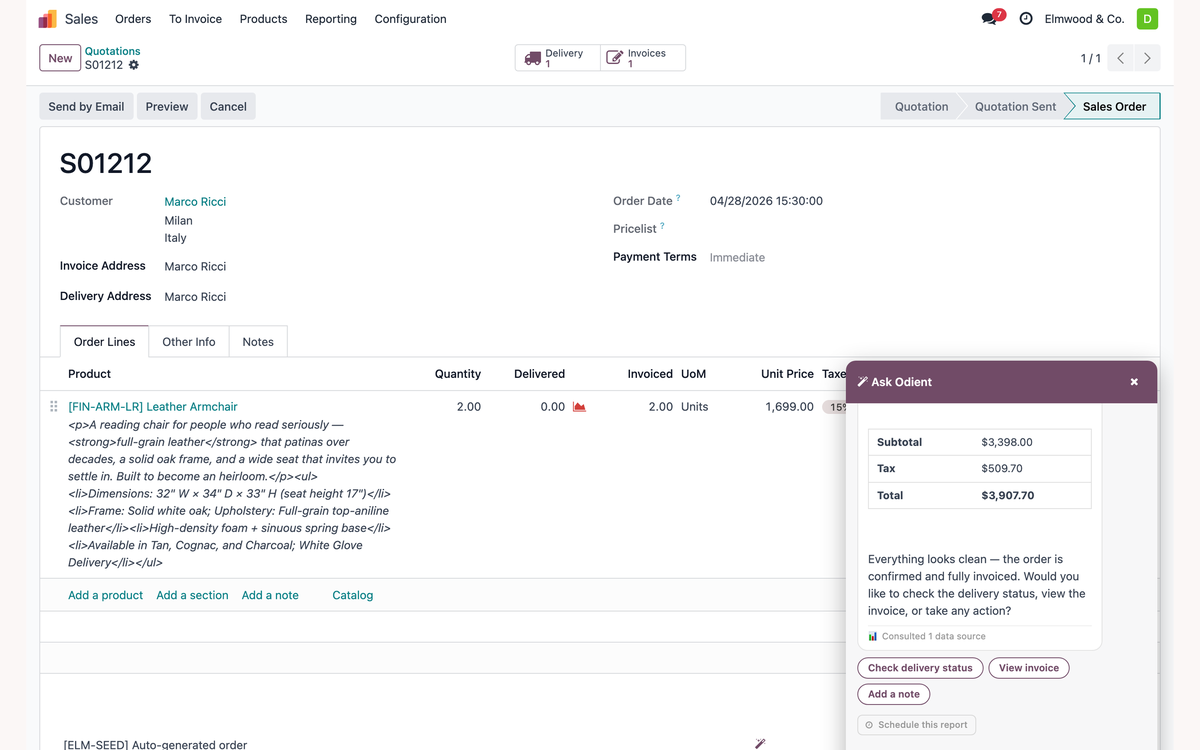
Stop assembling. Start approving.
The Monday overdue-chase. The “where’s that order” hunt. The month-end reconcile. Odient does the assembling. Your team does the deciding, and gets its week back.
tell you no.
An assistant that can do real work is only safe if it can be refused. Ask Odient to touch a record you are not allowed to see, and it stops. The refusal is logged too.
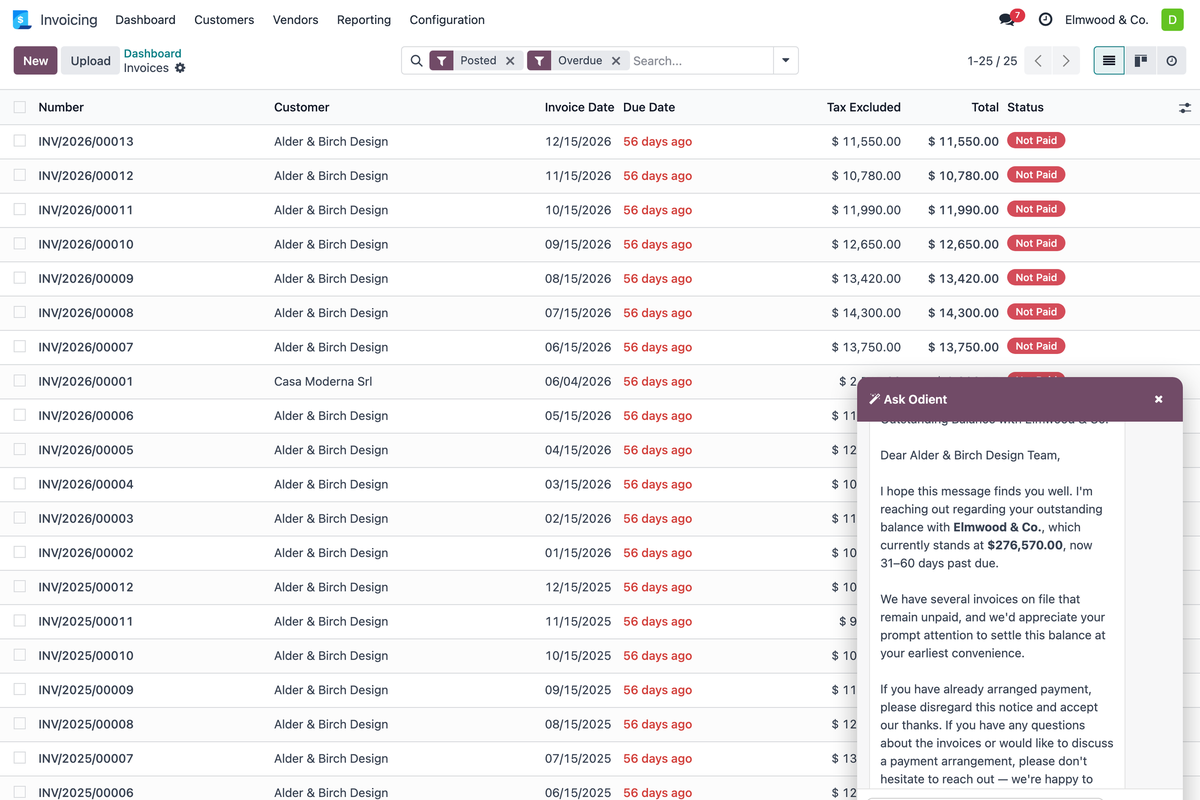
The thing that’s drifting, handled before it costs you.
Overdue accounts, stock about to run dry, a deal going cold. Odient flags it, prepares the fix, and waits for your go.
Frequently asked questions.
What is Odient?
Odient is a governed AI layer for Odoo ERP that answers from live data and takes approved actions - on Odoo 17, 18 and 19, Community or Enterprise. Ask in plain language; it reads across your modules, prepares the work, and nothing runs until a person says go.
Does it work with Odoo Community?
Yes. Odient works the same on Community and Enterprise, versions 17, 18 and 19. It connects to your existing instance and your existing records. No migration, no re-modelling, no parallel system to feed.
Is this a chatbot?
It answers like one, but the difference is what happens next: Odient prepares the actual work (the quotation, the reminder, the transfer) and holds it for your approval. Every answer cites the record it came from, and every action lands on one audit trail.
Is my data used to train AI models?
No. Your Odoo data is read to answer and act in the moment, never to train models. Every request passes a five-layer firewall and is logged: who asked, what ran, whether policy allowed it.